
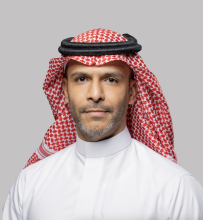
Mohammed Al-Rumaih, Chief Executive Officer, Saudi Exchange
Mohammed Al-Rumaih, Chief Executive Officer, Saudi Exchange
The Saudi Exchange has recently signed a landmark Memorandum of Understanding with the Palestine Exchange. Could you share the strategic rationale behind this collaboration and what it signifies for the region’s capital markets?
The Memorandum of Understanding (MoU) signed earlier this year with the Palestine Exchange reflects our strategic commitment to strengthening capital markets across the MENA region through purposeful collaboration.
This agreement builds on a series of regional partnerships established in 2024, including with the Bahrain Bourse and Qatar Stock Exchange, reinforcing our role as a key facilitator of market connectivity.
As the region’s largest and most liquid exchange, the Saudi Exchange continues to act as a catalyst for economic integration and capital market development, supporting the objectives outlined by Vision 2030 and the Financial Sector Development Program (FSDP).
How do you see the role of exchanges evolving in today’s increasingly complex and interconnected financial landscape — particularly in emerging markets like the GCC?
Exchanges have evolved well beyond their traditional role as venues for trading securities. Today, they serve as key enablers of economic growth, financial innovation, and investor confidence, particularly in emerging markets such as the GCC. Exchanges are also instrumental in facilitating capital formation, driving economic diversification, and integrating regional markets into global investment flows.
At the Saudi Exchange, we are not just responding to this evolution, we are shaping it. Our role has expanded from that of a market operator to a strategic catalyst for capital market transformation. By offering a diversified suite of products, including equities, fixed-income instruments, and derivatives, we meet the needs of an increasingly sophisticated investor base and contribute directly to Saudi Arabia’s economic development.
In 2024, we achieved substantial progress in broadening market participation. We celebrated 55 listings during the year and deepened our global footprint through strategic collaborations. Notably, we acquired a 32.6% stake in the Dubai Mercantile Exchange (now Gulf Mercantile Exchange, GME), enhancing our presence in regional commodities trading. We also signed Memorandums of Understanding with international exchanges such as the Johannesburg Stock Exchange, reinforcing the Saudi Exchange’s role in enabling cross-border collaboration and creating new opportunities for dual listings.
What are the key priorities for the Saudi Exchange when it comes to building investor confidence during periods of global economic uncertainty?
Investor confidence during periods of global economic uncertainty is grounded in transparency, strong governance, and operational reliability. At the Saudi Exchange, these principles remain central to our strategy and have played a key role in sustaining investor trust, particularly during the record-setting achievements of 2024.
A cornerstone of this success has been our continued investment in market infrastructure. In 2024, we completed Phase 2 of the Post-Trade Transformation Program (PTTP), the largest infrastructure upgrade in the history of the Saudi capital market. This program expanded investor access to a broader range of financial instruments, enhanced post-trade efficiency, and significantly reduced systemic risk. These enhancements have helped reinforce market resilience and strengthen transparency, both of which are essential to investor confidence.
As of today, the Saudi Exchange has surpassed 450 listed securities. This momentum has continued into 2025, with 14 new listings recorded in the first quarter alone. Our regulatory reforms have also supported increased foreign investor participation. The number of Qualified Foreign Investors (QFIs) exceeded 4,200 by Q1 2025, reflecting rising global confidence in the Saudi capital market.
Diversification across asset classes has further contributed to this progress. The continued growth of the fixed-income segment and the introduction of new instruments such as derivatives have expanded the range of investment options, increasing the market’s overall appeal.
Looking ahead, we will continue to build on this foundation. Our focus remains on deepening market strength, supporting sustainable growth, and providing an efficient and transparent environment for both local and international investors. The progress achieved in 2024 is an important milestone in our long-term strategy to advance the Saudi capital market’s role in the global financial system.
Strong governance is essential for well-functioning markets. In your view, how can exchanges like Saudi Exchange support the development of governance standards across listed companies and market participants?
At the heart of any robust financial and capital market lies strong governance. As the Saudi Exchange continues to evolve, we are committed to setting and upholding the highest standards of corporate governance. Our role extends beyond just facilitating transactions; we actively work to ensure that listed companies adhere to best practices in transparency, board independence, and shareholder rights.
This commitment is reflected in our continuous dialogue with regulators and market participants to refine governance frameworks, ensuring they align with international standards. In 2024, we took significant steps by introducing new regulations that incentivize market makers, enhancing liquidity and improving price discovery, both of which contribute to a more transparent and efficient market. Furthermore, our efforts to introduce and promote ESG disclosures among listed companies signal our dedication to long-term sustainability. As the region’s leading exchange, we are committed to fostering a culture of accountability, which is essential for attracting and retaining global investors.
Finally, what message would you like to share with board directors and governance professionals in the GCC as they navigate market complexity and increasing investor expectations?
As markets evolve amid a turbulent and fast-paced global economy, the role of board directors and governance professionals has never been more crucial. With the growing complexity of global financial systems and increasing investor expectations, governance professionals in the GCC must be proactive in staying ahead of emerging trends, particularly in areas that are increasingly important to investors such as ESG and digital transformation. Effective governance is the cornerstone of long-term market stability, and those who embrace transparency, accountability, and risk management will position their companies for sustainable success.
My message to GCC board directors is to prioritize their long-term strategic vision while being agile and adaptable enough to respond to the evolving demands of investors. For companies that aim to list on the Saudi Exchange or listed companies, our role is to support you with the tools, frameworks, and market infrastructure necessary to navigate these challenges. By working together, we can continue to strengthen the GCC’s position as a competitive and trusted investment destination, furthering the region’s economic diversification in line with Vision 2030.