
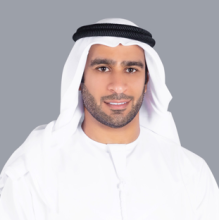
H.E. Mohamed Juma Al Musharrkh, CEO Sharjah FDI Office
H.E. Mohamed Juma Al Musharrkh, CEO Sharjah FDI Office
1. From your perspective as CEO of Invest in Sharjah, how are shifting global investment trends influencing the way Sharjah positions itself as a destination for international capital and business?
Global investment is becoming more selective, with companies reassessing where they manufacture, how they structure supply chains and where they can build greater resilience. Across the sectors we are targeting, greenfield FDI projects in the GCC increased by 81% between 2021 and 2024, compared with 19% globally. This reflects a broader shift in how companies are thinking about location and long-term competitiveness.
For Sharjah, this reinforces the importance of offering more than capital access or market proximity. We are positioning the emirate as an integrated ecosystem where industry, logistics, research, talent and innovation come together.
Our dual-port connectivity, industrial zones and specialised free zones are important advantages. We are already seeing this translate into activity. The Sharjah–Oman logistics corridor handled approximately AED 1.7 billion in goods and more than 34,000 trucks in its first three months, with cargo value rising 66.26% year-on-year.
The objective is to attract investment that strengthens Sharjah’s capabilities, creates specialised jobs and generates value well beyond the initial capital deployed.
2. What role do strong governance, transparency and institutional credibility play in attracting long-term investors and strengthening confidence in an investment destination?
They are fundamental to long-term investment decisions. As global capital becomes more selective, investors are looking beyond incentives and immediate returns to assess the quality, predictability and credibility of the environment in which they will operate.
For investors, strong governance means knowing that regulations are clear, processes are predictable and institutions can be trusted to deliver consistently. Transparency reduces uncertainty and gives businesses greater confidence when making decisions that extend over many years.
At Invest in Sharjah, this means working as part of a wider ecosystem to make the investor journey clear and connected. It also means maintaining strong relationships across government, economic authorities and the private sector so investors can access the information, expertise and support they need.
But institutional credibility is ultimately built through execution. Consistency between policy and implementation is what turns confidence into long-term commitment.
For us, the objective is not simply to facilitate an investment into Sharjah. It is to create an environment where businesses can establish, expand, reinvest and contribute to the wider economy over time. That requires institutions that are responsive, transparent and capable of evolving alongside business needs.
3. As Sharjah continues to diversify its economy, how can business leaders and boards balance growth ambitions with the need to build resilient and sustainable organisations?
Growth and resilience should not be viewed as competing priorities. In an increasingly volatile environment, sustainable growth depends on an organisation’s ability to adapt while maintaining a clear strategic direction.
For boards and business leaders, this means looking beyond short-term performance and asking whether growth is building capabilities that will remain valuable as markets change. That includes investing in talent, technology, supply-chain resilience and strong governance, while avoiding excessive dependence on a single market, product or source of growth.
We apply a similar principle when looking at investment in Sharjah. We are increasingly focused not only on the capital a project brings, but on what it adds to the economy over time. Can it introduce new technology, develop local supply chains, create specialised employment or bring R&D and product development functions to the emirate?
This is where sustainable growth becomes more meaningful. The strongest investments are those that continue creating value after the initial capital is deployed.
For business leaders, the challenge is therefore not simply to grow, but to build organisations capable of growing through change.
4. Beyond capital and infrastructure, how important is leadership capability in creating an ecosystem where international investors and local businesses can grow successfully together?
Leadership capability is critical because investment ecosystems are ultimately built by people and institutions, not infrastructure alone.
Capital and physical infrastructure create the conditions for growth, but leadership determines how effectively those assets are converted into sustainable economic value. This includes the ability to build partnerships, develop talent, embrace technology and connect different parts of the economy around shared opportunities.
For Sharjah, that means creating stronger links between international investors, local businesses, universities and research institutions. Our academic and research ecosystem provides an important pipeline of engineering and technical talent, while platforms such as Sharjah Research Technology and Innovation Park (SPARK) create opportunities for industry and academia to collaborate.
This matters because we are increasingly looking for investment that brings more than production capacity. We want companies that can introduce new expertise, develop technology, create skilled employment and build local supply chains.
Leadership is therefore also about creating connections across an ecosystem. When institutions, businesses and talent can work together effectively, international investors can become more deeply integrated into the local economy, while local businesses gain access to new capabilities, markets and partnerships.
5. Looking ahead, what leadership and governance priorities will be most important in strengthening Sharjah’s competitiveness and positioning within the UAE and the wider region?
The priorities are closely connected: institutional agility, talent and technology, economic diversification, and governance that continues to evolve alongside the needs of business.
Competitiveness today is not determined only by infrastructure, cost or market access. It increasingly depends on how quickly an economy can respond to technological, economic and geopolitical shifts while maintaining confidence and continuity.
For Sharjah, this means continuing to strengthen the institutions and platforms that make it easier for investors and businesses to navigate the market, while building the capabilities that will drive future growth. AI, advanced manufacturing, logistics, innovation and human capital will all play an important role.
It also means looking at investment through a longer-term lens. The objective is not simply to attract more companies, but to attract businesses that strengthen local capabilities, create specialised employment, develop supply chains and generate continued reinvestment.
Ultimately, strong governance provides stability, while adaptive leadership provides the ability to respond to change. Bringing these together is what can help Sharjah remain competitive while creating an environment where businesses can build for the long term.