

 How is your organization strengthening resilience while continuing to deliver on long-term strategic priorities?
At Industrialization & Energy Services Company (TAQA), resilience is about maintaining focus on long-term value creation while adapting to market, technology, regulatory, and customer changes. In the energy sector, resilience means protecting the fundamentals “safety, reliability, operational excellence, financial discipline, governance, and clear accountability” while continuing to make disciplined choices for the future.
From a governance perspective, this requires strong portfolio oversight, strategic alignment, and active engagement with our joint ventures and subsidiaries. It also means ensuring that boards and shareholder representatives are not only focused on immediate performance, but also on long-term value creation, risk visibility, and decision quality.
At the same time, TAQA continues to advance its strategic priorities by strengthening its portfolio, expanding market presence, investing in innovation, and supporting the energy transition. This balanced approach allows the organization to grow with discipline while preserving the stability and reliability expected from a leading energy services company, and ultimately supports sustainable, profitable growth for our shareholders.
What are the key risks shaping the energy sector today, and how are they influencing board-level discussions?
The energy sector is facing a more complex and interconnected risk landscape than in previous cycles. Traditional risks such as commodity price volatility, project execution, supply chain pressure, inflation, and operational reliability remain highly relevant. However, they are now joined by newer and more dynamic risks, including geopolitical uncertainty, evolving regulation, cyber threats, climate-related physical risks, energy transition pressures, technology disruption, and competition for talent and capital.
At board level, this is changing the nature of the discussion. Boards are increasingly expected to look beyond short-term performance and ask whether the organization is structurally prepared for uncertainty. That includes questions about capital allocation, scenario planning, portfolio resilience, infrastructure readiness, sustainability, digital readiness, stakeholder expectations, and whether management has the capabilities required to execute through volatility.
For TAQA, risk management is closely linked to strategic decision-making. The board’s role is not to remove uncertainty, but to ensure that uncertainty is properly understood, challenged, and reflected in decisions that protect value while positioning the company for sustainable growth.
How do you balance operational stability with the need to invest in transformation, particularly in sustainability and infrastructure?
I would not frame operational stability and transformation as competing priorities. In energy and infrastructure, the ability to transform depends on having a strong operational base, disciplined execution, reliable assets, and consistent service quality. At the same time, long-term stability cannot be protected by relying only on today’s business model.
In practical terms, this means protecting the core business through safety, reliability, cost discipline, customer focus, and robust governance, while investing selectively in transformation areas that strengthen future competitiveness. These include digitalization, technology, sustainability, infrastructure, and lower-carbon opportunities.
The practical challenge is capital discipline. Boards and management teams need to distinguish between transformation that is strategically necessary and transformation that is simply fashionable. Investments in sustainability, infrastructure, technology, and new capabilities must be linked to clear strategic logic, risk-adjusted returns, regulatory direction, and long-term competitiveness. The board’s role is to test that logic: why this investment, why now, what risks we are accepting, what capabilities are required, and how will success be measured?
What role does governance play in ensuring effective oversight of large-scale, capital-intensive projects?
Governance is essential in capital-intensive projects because the consequences of weak oversight are significant. Large-scale projects often involve major capital commitments, long timelines, multiple stakeholders, and complex technical, commercial, regulatory, and operational risks. Strong governance helps ensure that decisions are not made in isolation or based only on optimism at the approval stage.
Effective oversight requires clear decision rights, approval processes, stage-gate discipline, risk assessment, transparent reporting, accountability, and early escalation of material issues. It also requires boards to focus on the assumptions behind the project, not only the headline economics. In many cases, the real governance risk is not bad intent, but insufficient challenge, unclear accountability, or limited visibility as project conditions change.
For TAQA, effective governance helps ensure that major projects remain aligned with strategy, risk appetite, expected returns, and shareholder priorities throughout the project lifecycle. In my experience, the quality of governance is often tested when conditions change, not when everything goes according to plan. A strong governance framework gives boards and shareholders the visibility to intervene early, reassess assumptions, and protect long-term value without unnecessarily slowing execution.
As a corporate affiliate of GCC Board Directors Institute, how has engagement with GCC BDI supported your approach to board effectiveness and governance?
Our engagement with GCC BDI has supported our approach to board effectiveness in several practical ways. Their director training and certification programs have helped strengthen governance capability, board readiness, and awareness of evolving governance practices, regulatory responsibilities, and fiduciary duties.
GCC BDI’s timely and relevant webinars have also created valuable opportunities to engage with emerging governance topics and regional boardroom challenges. In addition, their tailored strategy workshops for portfolio companies have helped translate governance principles into practical discussions around board effectiveness, strategic oversight, and value creation. Their ongoing advisory support has also provided a useful external perspective as we continue to strengthen governance practices across our portfolio.
What I value most is that GCC BDI’s support is not generic. It is grounded in the realities of boards and companies operating in the GCC, which makes the engagement highly relevant, practical, and directly applicable. As organizations in the region continue to grow in scale and complexity, that kind of practical governance support becomes increasingly important to reinforce accountability, resilience, and responsible growth.
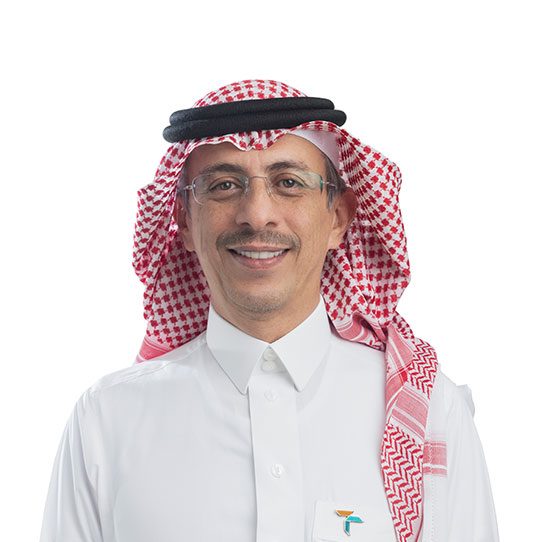
About Adel Al-Ghadhban, Chief Executive Officer
Mr. Adel Al-Ghadhban currently serves as the Chief Executive Officer of TAQA. He also holds position as Board Member on Arabian Drilling Company (AD), and serves on the boards of Special Oilfield Services (SOS) in Oman and AZR Wireline. Mr. Al-Ghadhban brings over 30 years of experience in portfolio management and finance across the oil & gas and manufacturing sectors, including nearly two decades at TAQA. As CEO, he is focused on building a strong foundation, expanding TAQA’s market presence, and accelerating innovation. He is committed to advancing the next phase of the company’s growth in alignment with its long-term strategic objectives. Since joining TAQA in 2006, he has held several senior leadership roles, including Executive Vice President – Ventures & Chief Investment Officer, General Manager for Finance and Administration, and CEO and Vice Chairman of Jubail Energy Services Company (JESCO). He also served as Chairman of the Board of Air Liquide Arabia (ALAR). Prior to joining TAQA, he spent six years with Saudi Aramco’s Treasury Department and four years as Chief Financial Officer in the healthcare sector. Mr. Al-Ghadhban holds a Master of Science in Finance from the University of Denver, USA, and a Bachelor of Science in Finance from Washington State University, USA.