
In conversation with Fred Cornet, Head of Capital Markets at APCO MENA, NMC Healthcare CEO David Hadley reflects on how a redefined board-management dynamic is shaping the company’s recovery.
 When the regional conflict escalated earlier this year, NMC Healthcare, one of the largest and longest-established private healthcare providers in the United Arab Emirates, didn’t wait for clarity. “The day it started, we set up a situation room,” David Hadley says, pulling senior leadership from all areas into a single operating loop.
The early moves were pragmatic. Stockholding was extended to 60 days. Supply chains were stress-tested. Scenarios were modelled daily. “We had to prepare for the worst,” he says, as uncertainty reshaped both planning and expectations.
Patient behavior shifted almost immediately. Volumes dropped, particularly in areas such as pediatrics, as families stayed home, schools went online and travel patterns changed. In some locations, flooding due to severe weather added further disruption. But within weeks, volumes stabilized and began to recover. “We’re still growing year on year,” Hadley notes, “albeit at a slower pace than at the start of the year.”
Recovery was closely tracked at the top of the organization. “We gave the board and shareholders weekly updates… that gave them confidence the people and the business were fine,” Hadley says.
Part of that resilience lies in the structure of the business. NMC Healthcare operates across the UAE and the full continuum of care, allowing strength in some areas to offset slowdowns in others.
But the more durable story sits behind those operational choices.
NMC Healthcare’s current leadership is working in the long shadow of its 2020 collapse, when billions of dollars in previously undisclosed debt pushed the company into administration and triggered a full-scale restructuring. The business that emerged is structurally different. More consequential, though, is how it is now governed, and how that governance shapes day-to-day decisions.
That shift shows up in how management and the board now interact. “The board allows the management team to perform our jobs,” Hadley says.
There is oversight, but not overreach; support, but not substitution. That clarity matters most in moments of uncertainty, when speed and accountability matter as much as strategy.
It wasn’t always that way. In the period immediately after administration, decision-making was necessarily centralized. Authority sat at the top, processes were restrictive, and autonomy was limited. “It becomes very bureaucratic,” Hadley says, describing a system built more for control than momentum.
What followed was a deliberate reset.
Delegation of authority was rewritten. Board committees were restructured with clearer mandates. Audit, risk and compliance functions were strengthened, not only as safeguards, but as enablers. Together, these changes have given management greater room to act while giving the board confidence that compliance and controls could hold.
The same principle runs through the cultural shift inside the organization. When Hadley joined, he found a business where trust, internally and externally, had to be rebuilt from first principles. “You can’t just say trust me,” he says. “You have to earn it.”
In practice, that meant changing both behavior and expectations. Strategy setting was opened up to wider participation. Values were defined and enforced more rigorously. Leadership became more visible, which was especially welcomed by staff during visits by all members of the senior leadership team to facilities during recent disruptions. Over time, those signals compounded. Staff turnover stabilized. Recruitment normalized. “That gives me comfort that we’ve changed,” Hadley says.
Externally, the same pattern is visible. Relationships with regulators have shifted to more regular, structured engagement, with monthly interactions rather than episodic oversight. With insurers, the conversation has become more data-led, supported by improvements in how the business captures and uses operational information. That has changed the footing of discussions around efficiency and outcomes.
There are also signs of longer-term alignment. Emiratization, for example, has moved from compliance pressure to strategic focus. From just a few dozen Emirati employees three years ago, the organization is now approaching 1,000. “That’s been a big change,” Hadley says, strengthening relationships with regulators and the communities the business serves.
None of this suggests a finished transformation. The legacy of the old NMC still remains to a degree, not least through ongoing legal and financial processes tied to the former listed entity. But the operating model that has emerged is more stable and more resilient.
In real time, the resilience of the system is being demonstrated, not through one defining moment, but through a series of challenges that highlight its adaptability: market shifts, operational hurdles and geopolitical complexities. What stands out now is the opportunity for the capable individuals at the helm to build on the structure with the clarity and discipline to navigate these moments effectively.
That’s where NMC Healthcare’s recovery stands out; not as a narrative about what’s been repaired, but as a testament to the organization’s ability to thrive under pressure and emerge stronger. It’s an ongoing, and so far highly successful demonstration of how a well integrated team can operate when it matters most.
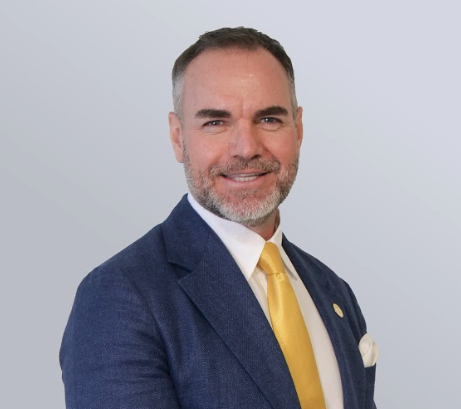
David Hadley, Chief Executive Officer, NMC Healthcare
A recognised leader in the healthcare industry, David Hadley is known for his strategic vision, business acumen and ability to build and develop high-performing teams. He is currently the Chief Executive Officer of NMC Healthcare, the largest private healthcare provider in the UAE, a position he assumed in February 2023. NMC operates more than 70 facilities with over 11,000 staff.
David previously spent 30 years with South Africa-based Mediclinic Group, one of the world’s leading private hospital organisations. During his tenure, he held key positions across Human Resources, Finance, Operations and Hospital Management.
He was seconded to Dubai in 2007 to lead the development and launch of Mediclinic City Hospital, the company’s first international project. He served as CEO of Mediclinic Middle East from 2009 to 2023, during which time he spearheaded the group’s growth to become one of the largest private healthcare providers in the UAE with seven hospitals and almost 30 clinics.
Beyond his responsibilities at NMC, David serves as a non-executive director at Magrabi Hospitals Group, contributing to its strategic growth. He also sits on the UAE Healthcare Advisory Board and is a member of the Next 50 UAE Leadership Committee.
David holds a Bachelor of Commerce degree from UNISA, an MBA with distinction from the University of Liverpool, completed the Oxford Advanced Management and Leadership Program in June 2022, and is currently undertaking the AI for Senior Executives Program at MIT. He also lectures part-time at the University of Liverpool.