
 The UAE has made significant progress in developing national talent and expanding Emirati participation across the economy. As the country enters its next phase of growth and transformation, the conversation around Emiratisation must continue to evolve.
Representation remains important, but headcount alone does not build leadership capability. The longer-term opportunity is to create sustainable pipelines of UAE national talent equipped not merely to fill roles, but to lead organisations, shape strategic decisions and navigate increasingly complex operating environments.
That requires us to ask a harder question: are organisations giving emerging Emirati talent the experiences, responsibility and accountability they need to become leaders?
Development requires experience, not just training
Sustainable Emiratisation begins with meaningful career development.
Recruitment is only the starting point. Organisations must consider the full talent lifecycle: how national employees are onboarded, developed, challenged, retained and ultimately prepared for leadership responsibilities.
Formal training has an important role to play, but many of the capabilities that define effective leaders cannot be developed in a classroom. They are built by taking ownership of demanding assignments, managing teams, working across functions and markets, contributing to strategic discussions and making decisions when the answer is not obvious.
This means being deliberate about the experiences given to high-potential national talent. If we expect future leaders to make complex decisions, manage transformation and operate confidently in global environments, they need opportunities to build those capabilities long before they reach the most senior levels.
Crucially, that also means resisting the temptation to protect high-potential talent from difficult assignments or the possibility of failure. Doing so may feel supportive, but it can ultimately constrain development. Judgement is built through experience, including situations where individuals must make difficult decisions, live with the consequences and learn from the outcome.
The objective should be opportunity combined with accountability: giving talented UAE nationals the support to succeed, while trusting them with meaningful responsibility and expecting them to perform.
Building leadership pipelines with intent
This cannot happen by chance. Leadership pipelines require long-term planning, organisational discipline and sustained attention from management.
Succession planning is therefore critical. Organisations need a clear view of the capabilities required for critical roles, the national talent that could progress into them and the development needed to address gaps.
But succession planning should not simply identify replacements for today’s leaders. Organisations also need to consider how roles themselves are changing and what tomorrow’s leaders will require as technology, artificial intelligence, new business models and stakeholder expectations reshape the way organisations operate.
Mentorship and sponsorship also have an important role ttomorrow’s leaders will require as technology, artificial intelligence, new business models,o play. Mentors provide guidance, perspective and support. Sponsorship goes further by ensuring that talented individuals are visible, trusted with meaningful opportunities and actively considered for roles that will stretch their capabilities.
Exposure is equally important. Strategic projects, cross-functional assignments, international experience and access to senior-level discussions allow emerging leaders to see how decisions are made and how the different parts of an organisation come together.
A responsibility beyond Human Capital
Building national leadership capability cannot sit with the HR function alone.
Boards and senior leadership teams have a critical role because the strength of an organisation’s future leadership has direct implications for execution and long-term value creation.
They should understand the leadership pipeline with the same seriousness with which they approach other strategic resources. Are high-potential employees progressing? Are they being stretched sufficiently? Are critical capabilities being developed internally? And is the organisation preparing people for the leadership challenges it will face in five or ten years?
These questions are particularly important as the UAE advances ambitions across areas including advanced technology, artificial intelligence, energy transition, financial services, life sciences and manufacturing. Future leaders will require technical and corporate expertise, but also strategic judgement, adaptability and the ability to operate across cultures and markets.
Human capital planning must anticipate these requirements rather than respond only once capability gaps emerge.
From targets to lasting capability
Emiratisation has played an important role in creating opportunities and increasing national participation across the economy. The next step is to ensure that participation translates into deep and sustainable leadership capability.
Success should therefore be measured not only by how many UAE nationals enter organisations, but by whether they are given the experiences and responsibility to progress, lead, influence and create value throughout their careers.
That requires commitment across the organisation: HR teams creating effective development frameworks, senior executives opening doors and sponsoring talent, boards maintaining oversight of succession and capability, and emerging leaders taking ownership of their own development.
The goal should not simply be to create more opportunities for UAE nationals. It should be to build a generation of leaders ready to take responsibility for organisations, people and capital, and in doing so help shape the UAE’s next chapter of growth.
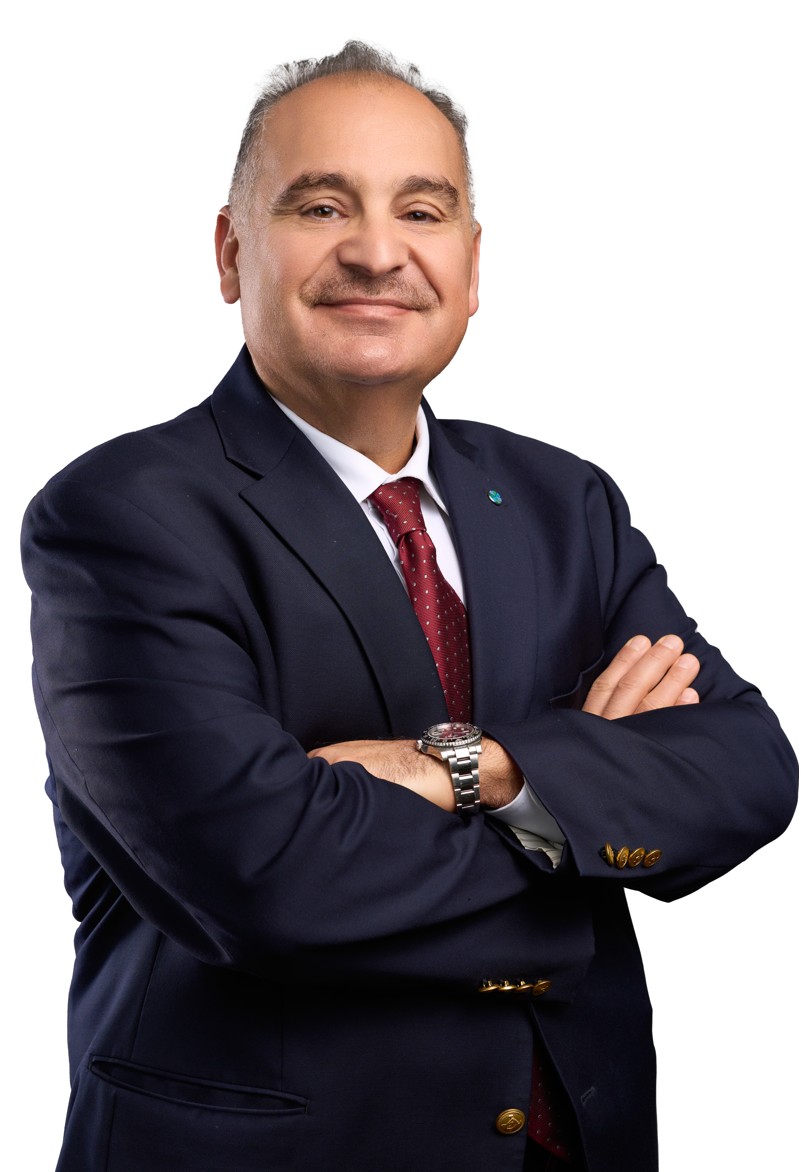
About Zouheir Tamim‐Jarkas
Zouheir Tamim‐Jarkas, CFA, is a human capital leader and a senior adviser for learning and development at Mubadala Investment Company in the United Arab Emirates. He is a member of the Board of Governors of the CFA Institute. Mr.Tamim‐Jarkas sits on the Ethics and Research Committee (IRB) of Cleveland Clinic Abu Dhabi. He is also the Chairman of the advisory board of LAB (Leadership Acceleration for Business), a learning and development partnership between Mubadala and General Electric.
Prior to joining Mubadala, Mr. Tamim‐Jarkas was on the faculty of the School of Business and Management at the American University of Sharjah, a CFA Program Partner. He is the past president of CFA Society Emirates and is its current education chair. Mr. Tamim‐Jarkas served on the Annual Conference Committee of CFA Institute and is currently a member of the Middle East Investment Conference Committee.
In addition to being on the Global Council at Queen’s School of Business in Canada, he is a member of the advisory board of the School of Business and Management at the American University of Sharjah. Mr. Tamim‐Jarkas is a member of the Board of Trustees of the Learning Center of the Emirates Securities and Commodities Authority.
He has worked over the past 28 years in different capacities in financial services, higher education, executive education, and learning and development in the United Arab Emirates, Canada, Germany, Lebanon, Egypt, and Nigeria. Mr. Tamim‐Jarkas holds an MSc in research from Henley Business School in the United Kingdom and an MBA from the American University of Beirut.