
Dr. Waddah S. Ghanem Al Hashmi
BEng (Hons), MBA, MSc, AFIChemE, FEI, MIoD
Senior Director - Sustainability, Operational and Business Excellence
Emirates National Oil Company (ENOC), UAE
Momentum is building more than ever before for a global energy transition to leave behind fossil fuels and move towards the sustainable use of clean energy alternatives, decarbonization. The signing of the 2015 Paris Agreement on Climate Change action in which almost 200 nations agreed to work together to limit the effects of climate change, and the adoption of the 17 Sustainable Development Goals (SDGs) by the United Nations General Assembly in 2015, embodied a global political and institutional response to climate change and expressed the collective will to work towards a sustainable and low-carbon future.
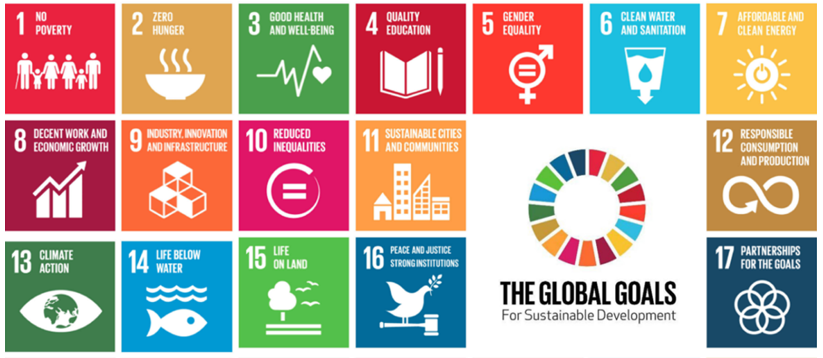
Figure 1: Summary UNDP Diagram of the 17 Strategic Development Goals (SDGs)
Countries including major Emerging Market Economies like China, India and others have created policy and mobilized resources to develop renewable energy infrastructure domestically, as well as internationally in some cases. Economics and technological innovation are supportive of the energy transition, with the low costs now possible in unsubsidized solar photovoltaic (PV) power deployments – in this region of 2 cents/kWh – of great benefit to project economics. The competitiveness of solar power increases the likelihood that large-scale solar power deployments will substitute natural gas, oil and coal power plants which currently account for over 60 percent of global power generation.
More recently still, efforts variously led by activists, universities, companies, investors and other groups have gathered momentum on the back of rapidly increasing global temperatures, accelerating concentrations of greenhouse gases and a more established scientific consensus. Thus, the challenges national policy makers, energy providers and corporate leaders must juggle to address growing demand, energy security, and climate change are becoming more and more urgent with each passing year.
The key energy policy characteristics necessary for a successful transition away from conventional hydrocarbon-based energy sources towards cleaner alternatives and in so doing secure both SDG 13 on Climate Action and national priorities concerned with the provision of adequate, diversified and reliable energy sources. The energy-related aspects of the U.N. Sustainable Development Goals are considered more broadly, with an eye for deriving practical and realistic recommendations for directors to consider with regards to their implementation.
Boards clearly have a very complex role of being simultaneously entrepreneurial (risk taking) and exercising prudent control; sufficiently knowledgeable about the business whilst standing back from the day-to-day workings in order to retain an objective and long term view; sensitive to the short-term pressures whilst being informed on the longer-term implications; knowledgeable of the local issues whilst maintain clear understanding of the more global matters; and focusing on the financial performance whilst acting responsibly towards all stakeholders.
To this end, directors’ knowledge of the United Nations’ 17 Sustainable Development Goals must be more than adequate. Strategically, boards must understand the global drive towards the transformation which began in earnest at the 2012 United Nations Conference on Sustainable Development held in Rio de Janeiro, Brazil (a.k.a. Rio +20). Today’s SDGs are more encompassing and try to tackle more holistically major matters including poverty, education, gender equality, clean water sanitation, climate action and other socio-environmental related goals.
Now, with Environmental Social and Governance (ESG) reporting the efforts required to meaningfully contribute to the implementation of the SDGs are within the scope of activity of boards of directors and the companies they lead. Boards and executives must work together firstly to understand the intent and the drivers for the goals to establish where they can collectively as an organization contribute. This will create a focus perhaps on a few goals. These efforts towards achieving the goals would thus be reported in the ESG reports which in turn will allow all the stakeholders to understand their drive towards ensuring the businesses remain sustainable.
Investments in clean energy are even more relevant in the current economic climate in which investments by companies in extractive industries are undergoing increasing scrutiny. The risk of large carbon-intensive investments becoming “stranded assets”, i.e., assets that have suffered unanticipated devaluations or conversion to liabilities because of environment-related risks, has resulted in investors demanding better reporting on the impact of corporate measures designed to keep climate change to 2 degrees centigrade. Improved reporting is necessary where investments run the risk of becoming stranded assets because of their long pay-back periods and high marginal costs. Therefore, effective ESG reporting with some validation will be a core and significant requirement for companies in the region, especially those which are listed or in the process of listing in the near future.
The U.N. Principles for Responsible Investment, the Sustainable Investment Policy adopted by the Harvard Management Company (which manages the Harvard endowment) and policies adopted by many other corporates mandate due consideration of climate change, greenhouse gas emissions, and other social and environmental considerations in relation to the underwriting of investments. The adoption of similar policies would be an example of leadership of the business community by directors committed to support the transition towards a low-carbon future in their economies.
Perhaps the most important and difficult role directors can play is that of leading their organizations towards fully embracing the ethos of sustainability necessary for us to prosper in a low-carbon future.
The energy policies in the world are having to change, and change fast with a world which is moving towards the application of sustainability principles driven through the UN Sustainable Development Goals. These SDGs provide a very purposeful framework for a set of goals that help governments, corporations and entities alike towards a better and more sustainable future. The energy industry and all those that are associated with it must be at the forefront of that change as their impact on sustainability is very significant.
They play a role that can have a substantial positive impact in a relatively short period. The risks of ignoring the efforts needed may have also very significant impacts on the bottom line of organizations. So, whilst there are clearly moral and ethical imperatives, there are also socio-economic as well as environmental drivers for corporations.
Directors drive organizations’ strategy. An organization in the energy sector or otherwise without an effective sustainability strategy will deny itself its full potential and will sooner than later face significant risk to its growth, profitability and longevity. Directors are the guardians and are the duty holders for the continued value proposition that organizations provide. Directors who fail to realize this in a world that has practically embraced these SDGs as the tenets of the business responsibility will surely be at some point held accountable at best as incompetent, and at worst grossly negligent.
Special Acknowledgements:
The author would like to thank both Steve Scalet, Chief Economist, ENOC and his sustainability team at the ENOC Group for their support.
About the Author:
Dr. Waddah S. Ghanem Al Hashmi
BEng (Hons), MBA, MSc, Dip SM, DipEM, AFIChemE, FEI, MIoD
Senior Director – Sustainability, Operational & Business Excellence
Emirates National Oil Company (ENOC) LLC Ltd, Dubai, UAE
Currently the Senior Director for Sustainability, Operational and Business Excellence for the ENOC Group and oversees all the sustainability, CSR, Energy and Resource Management and reporting as well as Business and Operational Excellence, Innovation and Process Improvement and LSS projects with the Group. He was appointed in 2015 as Executive Director, EHSSQ & Corporate Affairs and in June 2018 was given the role of Senior Director for Sustainability, Operational and Business Excellence. He also chairs various committees in ENOC including the Governance and Oversight for the SAP Digital Transformation; Operational Excellence Framework Committee and the Group’s Asset Integrity Committee.
Waddah holds several academic and vocational qualifications including PG Diplomas an MSc in Environmental Sciences; an Executive MBA from and a Doctorate from the University of Bradford in the UK. His publications include various research, practitioner journal and conference papers in addition to 7 internationally published books mainly is Safety Management, Operational Excellence, Reflective Learning, HSE Practitioner Executive Development, Governance and Leadership as well as theology. Two books are currently under development in PSM, Human Factors and another on Governance and Leadership in Health and Safety.
He has served for 9 years as Vice Chairman of Dubai Carbon; a Board Member of the not-for-profit Emirates Environment Group; an Executive Committee Member (Board) the Oil Companies International Marine Forum (OCIMF) and a Board/Council member of the Energy Institute (EI) in the UK and serves as the Hon. Chairman of the Energy Institute Middle East Branch. He is also the senior advisor to the Board of the Clean Energy Business Council. He was born and is based in Dubai, United Arab Emirates.