2024 marks a breakthrough for sustainability in the GCC

As we reflect on a year marked by significant climate progress across our region, including landmark climate actions and initiatives at COP28, it is evident that businesses and political leaders are increasingly committed to tackling the climate crisis, adopting circular economy principles, and harnessing the region’s competitive advantage around renewable energy. PwC Middle East’s 2024 sustainability survey reaffirms the increasingly vital role of boardrooms in supporting this momentum.
Business leaders are increasingly embedding sustainability principles and making structural changes to act on them. A growing roster of companies now have a Chief Sustainability Officer or senior executive just below C-suite dedicated to advancing their sustainability agenda.
Companies report that they are increasingly able to access green bank loans and green bonds instead of just self-funding sustainability initiatives. However, the need for new talent and workforce skills remains a significant issue. Ensuring the workforce can effectively implement sustainability actions is one of the biggest challenges facing our leaders.
Looking ahead, governments and the private sector must continue prioritising responsible investments and explore forward-thinking ways to leverage technology, such as Generative AI (GenAI). Business leaders would also benefit from evidence-based insights about sustainability actions not only generating a return on investment but also accelerating profit. Notably, companies that prioritise sustainability are often more profitable, as climate-conscious consumers prefer brands that commit to environmental responsibility, our findings show. Additionally, businesses that take climate risks seriously and future-proof their operations and supply chains are likely to perform better in the long run.
Creating positive, enduring change requires timely actions, building the right capabilities, and developing infrastructure and legislation to provide the framework to further enable progress. This journey towards sustainability is multi-faceted and requires concerted efforts from all stakeholders, with boards reiterating their position as valuable sources of strategic oversight along the way.
Sustainability takes centre stage in company strategy
The evolution of management teams to align with sustainability requirements is already underway. Four in five executives (79%) surveyed for our study stated that they now have a formal sustainability strategy in place, showcasing a notable increase from 64% in 2023. Moreover, the majority (52%) are fully embedding their sustainability strategy across their organisation. Half of the survey respondents stated that they have made a net-zero commitment, with an additional 26% working toward one. These statistics show a promising shift in corporate attitudes towards sustainability, moving beyond mere lip service to tangible action.
Furthermore, one in two companies now have a Chief Sustainability Officer (CSO) or plan to appoint one in the next 12 months. For 90% of our survey respondents, these new leadership roles involve both setting sustainability strategy and policy and overseeing monitoring and reporting. The creation of these high-level positions demonstrates the increasing importance of sustainability within corporate structures, and the recognition that it needs dedicated leadership to drive it forward.
Creating a talent pipeline for the future
The need for new talent and workforce skills remains a significant issue along the journey towards sustainability. Environmental, social, and governance (ESG) policies approved at board levels will be instrumental in charting a roadmap to bridge this gap. Our report highlights that a lack of internal skills and sustainability expertise challenges one in three companies. To address this issue, companies are exploring various approaches, including hiring or contracting talent, investing in in-house training, and collaborating with educational institutions to ensure that the workforce of the future is equipped with the necessary skills to drive sustainability forward. Additionally, technologies like Generative AI (GenAI) are seen as key enablers for enhancing sustainability efforts and addressing skill gaps in the long run.
Tapping into a new funding
Respondents in this year’s survey plan to access a greater variety of financing opportunities and mechanisms. Self-funding remains the most common green finance source, while 34% reveal that they would opt for green loans, and an equal number (33%) will consider capital markets (for example, green or blue bonds) as part of their financing options. The growth in companies planning to access green loans and bonds, from 13% in 2023 to 33% in 2024, is a promising development for sustainability in the Middle East.
This diversification of financing options not only supports a wider array of sustainable projects but also enhances the region's ability to meet ambitious climate targets. It signals a strategic shift towards a more resilient economic model, where sustainable initiatives are not just seen as altruistic endeavors but as smart investments with long-term benefits for both businesses and the environment.
Looking ahead: The private sector is a catalyst for action
The private sector can play a role in scaling the region’s sustainability commitment. Our survey shows that nearly 9 out of 10 leaders believe that the private sector can play a role in scaling the region’s sustainability commitment through collaboration, partnerships and alliances. However, while half of the region’s sustainability leaders see cost savings as a key driver for adopting sustainability practices, one in five remains uncertain about the return on investment.
Boardrooms have a crucial role to play in the journey towards sustainability. With concerted efforts required from all stakeholders, decision-making at this level can ensure a fair and holistic growth map is implemented to ensure corporate investments into environmental sustainability serve the broader economy and society, too. As we look ahead, it is crucial for business leaders in the Middle East to focus on upskilling the workforce, strengthening infrastructure, navigating regulation, and accessing green funding to accelerate sustainable growth. With these focused efforts, we can continue to break through barriers and make significant strides towards a more sustainable future. With momentum continuing to build for a more resilient future, now is the time for us to shape a sustainable tomorrow for the Middle East.
Biography: Dr Yahya Anouti, Partner, Strategy& Energy, Resources and Sustainability practice PwC Middle East sustainability leader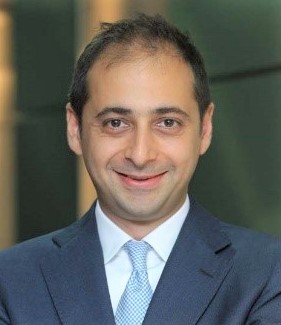 Dr. Yahya Anouti has over 15 years of management consulting experience. He is the Lead of ESG platform, a Board member of the Strategy& Ideation Center, and a member of the Strategy& global community of practice on sustainability. Yahya is a member of the University of Texas at Austin Advisory Council for Energy and Earth Resources, and an expert advisor to the Extractive Industries program of the UNDP in New York. Yahya is also a member of the World Bank resource related communities of practices and has worked for the sustainable development department of the World Bank, Washington D.C.
Industry Expertise: Sustainability, Environment (biodiversity, natural resources, etc.), Circular economy, Low carbon transition, Local content
Functional Expertise: ESG Strategy, Research, Innovation & moonshot thinking, Strategic planning, Institutional framework design, Impact assessment, Localisation, Governance and Operating model design